Tuesday, June 26, 2007


Monday, June 25, 2007
New Frontiers of Knowledge Management: Review in Knowledge Management Research & Practice
A very positive review of my book has been published in the current issue of Knowledge Management Research & Practice (Palgrave Macmillan, 2005).
____
Book Review
Knowledge Management Research & Practice (2007) 5, 71–72. doi:10.1057/palgrave.kmrp.8500122
New Frontiers of Knowledge Management
Kevin C. Desouza (Ed)
Published by Palgrave Macmillan, Basingstoke (UK), New York (USA), 2005,
ISBN-13: 978-1-4039-4240-1, ISBN-10: 1-4039-4240-4, 275pp
Price £60
Reviewed by, Yanqing Duan of the University of Bedfordshire Business School, U.K.
New Frontiers of Knowledge Management is a contributed volume edited by Kevin C. Desouza. The book contains a collection of 12 chapters, which cover a range of topics focusing on the new frontiers in knowledge management with creative thinking, novel insights and innovative ideas. Any attempt to edit a book on 'the new frontiers' of this multi-disciplinary and widely debated field would be a challenge. Therefore, the editor should be commended on his attempt.
The book starts with an excellent introduction by the editor, which is a must read section for any reader before embarking the rest of the chapters. It defines the term 'new frontier' in knowledge management, sets up the rationale for the book and provides a succinct summary of each author's novelty in his/her contribution to the book. The editor stresses the necessity of sharing options and feelings on the new frontiers and highlights his three motivations in pulling together this unique book, which aims to
'provide an avenue for researchers and practitioners to be adventurous, venture out, and postulate some of their creative thinking.'
'assemble authors who would cross the local space and write on knowledge management in an integrated fashion' and
'seek out some of the new insights and provide an avenue for them to be presented.'
There is no doubt that the editor has achieved the above by providing an opportunity for knowledge management scholars and practitioners to share and exchange their insights and views and be explorative in seeking new ideas and innovative development.
Topics covered in the book include: science and technology knowledge management, knowledge visualization, personalizing knowledge delivery services, knowledge security in organizations, knowledge markets, software artefacts for knowledge management, ubiquitous computing in networked organizations, collaborative enterprises, knowledge flow dynamics, knowledge integration in teams, the role of incentives in knowledge transfer, and innocuous knowledge management.
The book is a mix of debates from social, organizational, technological and economic perspectives, all aiming to offer their thoughts and insights in addressing knowledge management challenges and problems, and attempting to seek new solutions. The strength of the book lies in its diversity, quality, depth and the authors' employment of multi-disciplinary perspectives in their treatments.
For example, from an organizational perspective, Chapter 5 addresses knowledge security in organizations in three focused areas: people, products and processes; and Chapter 10 draws from knowledge flow theory to develop a multi-dimensional model to inform organizational design. From a more technological point of view, Chapter 13 argues the value of innocuous knowledge and explores the management of innocuous knowledge with distributed knowledge networks. The discussion on how market mechanisms can help facilitate knowledge management in Chapter 6 and the role of incentives in knowledge transfer in Chapter 12 offers different aspects of arguments from an economic dimension. Chapter 9 argues the importance of collaborative enterprise from a more humanistic aspect and proposes a generic framework for collaboration, which incorporates the influential factors and the types of capability that needs to be developed.
Most of the authors set forth their arguments on addressing knowledge management problems and challenges from mixed perspectives of social, organizational and technological dimensions. For example, Chapter 2's contributors share their insights on science and technology management emphasizing the conversion of technical textual data to technical knowledge; Chapter 3 emphasizes the importance of making knowledge visible and postulates how this can be achieved; Chapter 4 addresses the challenges in personalizing knowledge delivery services, arguing that knowledge is emergent and needs to evolve based on its particular context; Chapter 7 explores the diversity of software artefacts use in supporting information and knowledge management through the four analytical lenses of interaction, interpretation, connection and collaboration; Chapter 8 argues the potential impact of the ubiquitous information environment (UIE) and proposes a framework for studying the UIE technologies and invites more research in this area; and Chapter 11 explores knowledge integration processes within teams and tests the link between a team's human capital and its knowledge integration competency with case analysis.
For any edited book on new frontiers, the selection of contributors would be critical to its attraction and success. A number of respected scholars and renowned executives in the knowledge management field, especially from America, have contributed to the book. The contributions from both academics and practitioners should be particularly appreciated by readers. However, out of 12 chapters, apart from two from the UK and one from Denmark, the rest of the authors are mainly based in the USA. The heavily American-based contributions may be seen as a weakness in offering a comprehensive reflection of thoughts on future directions worldwide.
In a similar way to most edited books, the collection of chapters represents a mix of depth, length and style. Readers may find that some chapters are better argued and in more depth than others. Others may challenge the novelty, significance or the 'eligibility' as a new frontier in certain topics. It can also be argued that some important or emerging topics may have been left out, such as dealing with culture and trust, dealing with tacit knowledge, transnational knowledge transfer in the global economy, communities of practice, intelligent knowledge systems, etc. However, one of the purposes of the book, as the editor stressed in his opening page, is for 'interested readers to embrace or criticize, to build on or refute, and above all to share' the contributors' views. To this end, the editor's effort can be well justified. As it is not possible to include all new frontiers in one book, the reviewer acknowledges this limitation. The book serves as a call for attention to the continuous effort in seeking new frontiers in this evolving field.
Overall, the editor has done a good job in terms of quality, depth and range of the papers collected. The book makes a unique contribution to the knowledge management literature and is a valuable source of innovative ideas and rich insights on advancing the understanding and achievement in knowledge management. Most of the chapters are well argued and easy to follow, although some of them may be more intellectually demanding for readers to digest. The book would not be recommended as a textbook for students, but is a useful reading for both knowledge management academics and practitioners who would like to further their thoughts on new directions and understand the implications of the new developments. It will also be particularly beneficial to new knowledge management researchers who seek inspiration and thought-provoking debates in their projects and research. I find the book an inspiring, and enjoyable read and hope that KMRP readers will feel the same.
See: http://www.palgrave-journals.com/kmrp/journal/v5/n1/full/8500122a.html
Sunday, June 24, 2007
Leaving on a Jet Plane...
I am getting ready to head back to the US. The last few days have been a blast in London. I spent time with my cousin, roaming around the various pubs, and even caught up with some good old friends. In addition, had sometime to indulge in some excellent Indian food…
Thanks to all that made my stay in England a memorable one…(Pete, Beryl, Ramanjit, Mike, Ash, Gabs, Flavian, Meena, Aunty Sara, Desiree, Franz, Ashley, Jude, Jaime, Bob, Mike, and everyone else…Cheers!)
Friday, June 22, 2007
My new book released…Kogan Page Meeting…

On Friday, June 22, I had a meeting at Kogan Page (www.kogan-page.co.uk) in their London office. To my surprise, they had a copy of my new book, Managing Knowledge Security: Strategies for Protecting Your Company's Intellectual Assets, which had been released the day before. So, for all of you waiting to order copies of my book, please visit amazon.com (http://www.amazon.com/dp/0749449616)or your local booksellers.
Thursday, June 21, 2007
Royal Society of the Arts (RSA)
Just got to London and I am now at the Royal Society of the Arts (RSA) (also known as the (Royal Society for the encouragement of Arts, Manufactures & Commerce; see http://www.rsa.org.uk/). I have been a fellow of the RSA since 2005 and this is my first visit to their building in London….I am writing this blog entry from the Fellow’s Library…
Wednesday, June 20, 2007
Bon Voyage from Oxford...
The last three days have been excellent. I have spent my hours at Oxford University. Oxford University (www.ox.ac.uk) is the oldest English speaking university in the world. Its traditions date back to the 1200s (lectures at Oxford date back even further to 1096, see http://en.wikipedia.org/wiki/University_of_Oxford) and still live on today. Oxford was a place where some of the fundamental movements in higher education occurred and the University has come to embody the character of academia in our modern societies. Throughout its early growth, Oxford University was a place where scholars could debate ideas, rebel against the norms, and even discover new insights and ideologies. Today, like most other universities, these characteristics have lost their prominence. Academia, for the most part, has become risk averse, a safe space, a nice place where no one wants to offend each other or engage in harsh debates for the betterment of society. To me, these last few days were a time to reflect on my own research, develop a few new ideas to pursue over the next year, and also make progress on my new book. I have truly enjoyed my time here at Oxford University. For those in academia, if you have never been out here, I urge you to make time for a visit.
Now, I am off to London for a few days…A nice selection of interesting meetings awaits me…
Monday, June 18, 2007
Evening Pictures in Manchester…Enjoying the Nightlife…
Here are pictures taken in Manchester during one of our evening outings at a club. Pictures were taken by Ramanjit Singh, School of Informatics, The University of Manchester...As these pictures will show, even professors and doctoral students can have a good time…
 |  |
 |  |
 |  |
 |  |
 |  |
Pictures from the IFIP Conference….
 Here are pictures from the IFIP conference (the opening reception, a few dinners, and the closing reception)…Pictures were taken by Ramanjit Singh, School of Informatics, The University of Manchester...
 |  |
 |  |
 |  |
 |  |
 |  |
 |  |
 |  |
Managing Knowledge Security: Book Cover and Inside Leafs
 To pre-order the book, please visit Amazon.com (Link)
Another travel update...London to Oxford
In Manchester, attending the IFIP conference took up the mornings, while enjoying pints and conversations with good friends and new colleagues was the activity of the evening. The IFIP conference was hosted in one of the most beautiful location in Manchester – The Town Hall.
After spending a few more days in Manchester, I headed to London. While in London, I have had the chance to catch-up with family and friends. In addition, I went roaming around the streets of London to take pictures of the beautiful and historic architecture (soon, I will be able to upload them for your viewing pleasure).
Today, I will head to Oxford for some writing and reflecting...
Thursday, June 14, 2007
Manchester, England...
Greetings from Manchester, England…The last three days have been quite fruitful, and the next three have jammed packed events as well. Here is a quick rundown:
Day 1 – Landed in Heathrow, took the train into Paddington, and then enjoyed a traditional English breakfast. Then, walked to Euston and caught the train to Manchester. Got to Manchester and basically had dinner (Fish and Chips, and a few pints) and got some rest.
Day 2 – Began the day trying to find an Internet Café and failed miserably. Then met with a few colleagues and began to catch up with the happenings in their lives…Then, headed to the IFIP Doctoral Consortium Dinner to meet the eager minds. Dinner was great and the conversations were even better…
Day 3 – Had a busy morning at the IFIP Doctoral Consortium. I did my best to pass on a few words of wisdom (and I mean few). This was followed by the evening IFIP reception. A group of students and faculty then headed for dinner and a few pints…Dinner was excellent and so were the conversations…Then, of the group that went to dinner, a few strong-minded and energetic individuals decided that it would be good to visit a few more pubs….I got back to my room at 3 A.M…
Hopefully, there will be a few more updates before I get back to the U.S. No promises…Too many other important, and interesting, things to do in England…Cheers
Thursday, May 31, 2007
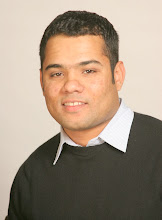
Kevin Desouza: Small office, big impact
Recently I was interviewed by Peter Kelley of the University Week on the Institute of National Security Education and Research, my origins and research aspirations, and views of a range of topics from the current war on terror to the pursuit of inter-disciplinary research and building global citizens of the future.
The article can be found at: Desouza Feature [http://uwnews.washington.edu/ni/uweek/uweekarticle.asp?articleID=33905]
The abstract of the article:
“Kevin Desouza is an assistant professor in the Information School, adjunct faculty in electrical engineering and the director of the Institute for National Security Education and Research, a constant, a blogger and the author of seven books. Oh, and he’s 27 years old.”
For the full edition of University Week [24 (30), May 31, 2007 – Jun 20, 2007], see http://uwnews.org/uweek/uweekindex.asp
P.S. Thanks to Mary Levin for taking the photograph and spending countless hours fine tuning it...She does work miracles...

Tuesday, May 29, 2007
Finland Distinguished Professor Programme
Thought I share some good news with you.
I have been chosen as one of the reviewers for the Finland Distinguished Professor Programme (http://www.fidipro.fi/) which is sponsored by the Academy of Finland (the main funding organization on basic research for Finland; http:// www.aka.fi/eng) and Tekes (the main public funding organization for applied research and industrial R&D in Finland; http:// www.tekes.fi/eng).
The objective of the Finland Distinguished Professor Programme is to recruit foreign professor-level top researchers to Finland for a fixed period of time. The new positions will have the highest academic status in Finland. A person who has proved to be a talented researcher and who can be deemed to contribute to the progress of research within his/her own field of specialization may be appointed to a Finland Distinguished Professorship.
Academic Journal Reviewing: Rubbish...
Occasionally, I question the caliber of a few editors and reputation of the so-called premier journals in the management discipline. I submitted a paper to a journal during the middle of March, two months later, I get the following reply:
"I am writing because we have thus far been unable to find a willing reviewer for your piece. One reason for the difficulty is that we have already slated for our 50th anniversary issue articles on the theme of innovation. Consequently, our resources (our reviewers) who specialize in this area are greatly depleted. We're very sorry, but on a rare occasion, this happens, and we have no choice but to return your article to you without review. You can be certain that this is not a reflection of the quality of your piece. Please accept our apology for the inconvenience, and good luck in finding an alternative place of publication."Now, do you see something wrong with this email response?
If you do not have reviewers to draw on then don’t you owe it to the authors to let them know this right away, instead of holding the paper in hiatus for eight weeks? Moreover, I am quite sure that there are several individuals who are capable of reviewing an email on innovation albeit they may not belong to your editorial board.
Surprises in academia are in short supply, but occasionally you get the weirdest of surprises….I think this is one reason to keep a Blog…to vent…and share interesting experiences…hopefully, someone can learn from this…
Monday, May 28, 2007
iSchool assistant professor will head new UW think tank on national security issues
I was featured in the Spring Issue of the Information School eNews Bulletin (see http://www.washington.edu/alumni/partnerships/ischool/200703/desouza.html) for details.


Off to England in a few days...
I will heading to England for a few weeks starting on June 9 and returning on June 25. During this time, I will serve as a faculty mentor for the IFIP 8.6 Doctoral Consortium (http://www.ifip86-2007.salford.ac.uk/) to be held in Manchester, UK. Bob Galliers (Bentley College) is the Doctoral Consortium Chair. Bob has done an excellent job in selecting an eclectic group of students who have diverse research interests and aspirations.
In addition, I look forward to meeting up with several of my European Colleagues during the month of June. I plan to spend a few days in Manchester, then head to Oxford, and finally spend a week in London before coming back to Seattle…
Thursday, May 24, 2007
Connectivity among Terrorist Groups
How do terrorist networks operate? How do terrorist acquire the necessary resources to carry out their activities? My recent paper, co-authored with T. Hensgen, examines these issues. We take an information and strategic alliance perspective to the issue of understanding the formation of terrorist ties. In addition, we outline how do terrorist alliances grow and mature over time.
Desouza, K.C., and Hensgen, T. “Connectivity among Terrorist Groups: A Two Models Business Maturity Approach,” Studies in Conflict & Terrorism, 30 (7), 2007, 593 - 613.
Abstract:
The reality of terrorism has become ubiquitous. Terrorist groups continue to garner front-page exposure, which contributes to their agenda, while stories of hostage dilemmas, suicide bombings, assassinations, and a variety of nefarious criminal activities lead the unsuspecting to wonder, “What’s next?” In order to begin to understand terrorism researchers should first understand how these terrorist groups operate and, far more importantly, what motivates others to co-operate with terrorists. No terrorist group operates in isolation. It is assured a priori that terrorist groups have to collaborate with other entities in order to further their agenda. In the conventional sense, terrorists have limited resources, limited capabilities, and limited reach. Without co-operation and support in support of criminal enterprises, they would function in isolation; their impact would be isolated. This article outlines two models that demonstrate how cooperation between terrorists and recognized, albeit criminal, institutions contribute to terrorist successes. The first, a resource model, outlines some of the resources that bind two or more terrorist groups. The second, an alliance model, layers different levels of collaborative engagements between terrorist groups and these institutions. Both models are descriptive in nature and contribute to an understanding of how terrorist groups must engage in the fundamentals of established economic practices in order to succeed.
Wednesday, May 23, 2007


Subscribe to:
Posts (Atom)